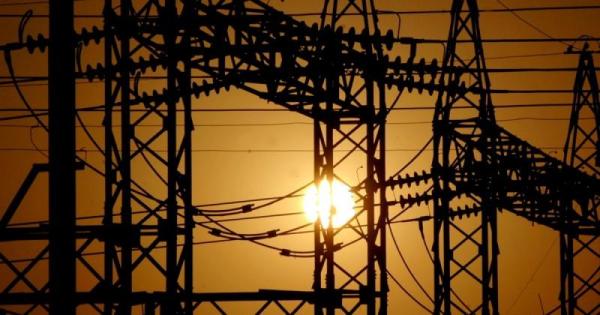
To intensify power sector reforms in the Union Territory, the Jammu and Kashmir Government has installed more than 12.36 lakh smart electricity meters to curb power theft.
According to a paper tabled in the Jammu and Kashmir Legislative Assembly, a total of 12,36,507 smart meters have been installed by the Jammu Power Development Corporation Limited (JPDCL) and Kashmir Power Development Corporation Limited (KPDCL) under various central schemes.
The installation is being carried out under the Prime Minister’s Development Package (PMDP) and the Revamped Distribution Sector Scheme (RDSS), with REC Power Development and Consultancy Limited (RECPDCL) serving as the lead implementation agency.
As per the district-wise data accessed, a total of 6,27,492 smart meters have been installed in the Jammu division, with the highest number in Jammu district (3,04,468), followed by Samba (58,707) and Kathua (57,320).
In the Kashmir division, 6,09,015 smart meters have been installed. Srinagar leads with 2,39,147 installations, followed by Baramulla (87,732) and Anantnag (77,943).
The department further stated that 1,600 smart feeder meters have been installed on 11 kV feeders across ten districts of the Jammu division.
In response to a query, the Power Development Department (PDD) clarified that the smart meters adhere to national standards and specifications prescribed by the Bureau of Indian Standards (BIS) and the Central Electricity Authority (CEA).
Notably, the smart metering initiative is a nationwide programme aimed at improving billing efficiency and reducing Aggregate Technical and Commercial (AT&C) losses in the power sector.
Per capita electricity consumption in Jammu and Kashmir recorded a compound annual growth rate (CAGR) of 2.15 per cent over the last nine years, increasing from 1,171 kWh to 1,488 kWh. Total purchased/consumed units rose from 15,225 million units to 20,830 million units during the same period, in line with rising demand.
As of November 2025, there are approximately 24.59 lakh electricity connections across various categories in Jammu and Kashmir.
The renewable energy sector in the Union Territory is also making significant progress, with a growing focus on solar energy and small hydropower projects. The Jammu and Kashmir Energy Development Agency (JAKEDA) has allotted Mini Hydel Projects (MHPs) with an aggregate capacity of 147.00 MW under the Independent Power Producer (IPP) mode, out of which seven projects with a cumulative capacity of 35.25 MW have been successfully commissioned.
Under the PM Surya Ghar Bijli scheme, 7,125 government buildings have been solarised against a target of 22,494, while 16,799 households have been solarised against a target of 83,550. These initiatives have added 131 MW to the region’s renewable energy capacity.
On the recommendation of the J&K Government, the Ministry of New and Renewable Energy, Government of India, has approved a project to provide 200 free units of electricity to 2.21 lakh Antyodaya Anna Yojana (AAY) families in Jammu and Kashmir under the PM Surya Ghar Muft Bijli Yojana (Utility-Led Aggregation model). Implementation is expected to begin soon.
Moreover, strategic IT interventions and enforcement measures have significantly boosted revenue realisation in the power sector. Revenue increased by 16.34 per cent, rising from Rs 3,616.63 crore in 2022-23 to Rs 4,207.61 crore in 2023-24. In 2025-26 (up to November 2025), revenue realisation stands at Rs 3,472.20 crore and is progressing on a similar trajectory, with expectations of surpassing last year’s figures by the end of the current financial year.
The government document further said that additionally, the implementation of the ‘Amnesty’ scheme in October 2022 facilitated the settlement of legacy dues for domestic consumers, benefiting around 3.32 lakh consumers and recovering Rs 411.40 crore in outstanding amounts between October 2022 and November 2025 through a structured instalment plan without late payment surcharges.
Several new initiatives have been outlined to further enhance operational efficiency and meet future energy demands. These include reducing power input and AT&C losses in areas equipped with smart meters and Aerial Bunch Cables (ABCs), constructing new grid substations, expanding transmission lines, and augmenting existing grid infrastructure.
A study was conducted in areas covered by 367 feeders that were nearly 100 per cent smart-metered to assess the reduction in power input and AT&C losses resulting from full smart metering.
Contact to : xlf550402@gmail.com
Copyright © boyuanhulian 2020 - 2023. All Right Reserved.